
Formal identifiability analysis
Identification with incomplete data
Joint observation structure distinguishes equal-cost designs that pairwise coverage cannot separate.
Manuscript submitted · Editorial decision pending
Research · Teaching · Doctoral interests
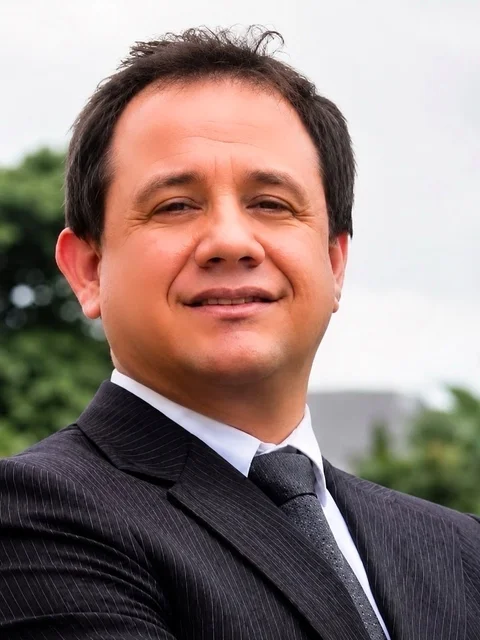
Professor at PUCP · Industrial Engineering
Artificial intelligence, statistical learning and optimization for decision-making under uncertainty. A research agenda connecting mathematical foundations, computational methods and real-world problems.
Open to doctoral research opportunities and academic collaboration.
PUCP · Lima, Peru
lsilva@pucp.edu.pe · Lima, Peru · ORCID 0000-0002-3395-3129
01 / Profile
Professor at PUCP, with a full-time appointment in the Department of Engineering at Pontificia Universidad Católica del Perú (PUCP), Industrial Engineering Section. Professional degree and master’s degree in Industrial Engineering from PUCP.
Research and teaching are connected by a common question: What information must a model preserve to support reliable inference and decisions under uncertainty? Work in machine learning, statistics and operations research addresses this question through formal analysis, computational experiments and applications to industrial, organizational and public systems.
The doctoral objective is to deepen the mathematical and statistical foundations of reliable learning and decision-making. The agenda develops in three connected directions: identification from partial observations, representations that preserve decision-relevant information, and evaluation that isolates a model’s contribution.
Research interests align with groups working on statistical machine learning, information geometry, optimization, trustworthy AI and decision science. University teaching, thesis supervision and experience with organizational systems provide a foundation for developing this agenda.
Concrete work connects the doctoral direction to questions, methods and results.
Formal identifiability analysis
Joint observation structure distinguishes equal-cost designs that pairwise coverage cannot separate.
Manuscript submitted · Editorial decision pending
Geometric reduction and computational comparison
An exact geometric reduction supports the study of certification for a fixed equilibrium candidate; strategies are compared on 540 verified instances.
Manuscript submitted · Editorial decision pending
Structural controls and experimental reassessment
Equivalent controls separate structure, information and implementation effects in higher-order representations.
In development · Methodological and experimental reassessment
More than fifteen years of experience leading ERP implementation projects, specializing in SAP Business One. This experience informs research questions about data quality, operational constraints and the implementation of decision-support systems.
View the institutional PUCP profile02 / Research
Study of how data, sampling and representation shape what a model can learn. Interests in identifiability, model evaluation and information geometry connect statistical foundations with computational learning.
Study of the information and resources needed to support decisions under uncertainty. Operations research, simulation and mathematical modeling connect formal properties with industrial and organizational questions.
Research on how to assess evidence, trace quantitative claims and distinguish useful structure from evaluation artifacts. Reproducible experiments and explicit assumptions support the development of reliable AI systems.
03 / Publications
Published studies in credit portfolios and urban logistics connect quantitative methods with operational decisions. The current agenda extends this applied perspective toward the information, representation and evaluation conditions that make a decision defensible.
Springer · Book chapter
Research project · Co-investigator · 2021–2022
Application of machine learning techniques to debt recovery and the valuation of non-performing loan portfolios.
Springer · Book chapter
Research project · Co-investigator · 2021–2022
Assessment of resilience in urban logistics and freight transport through simulation of disruptive events.
04 / Projects
From information to decisions: an interdisciplinary research portfolio.
Explore a selection of work on statistical learning, mathematical structures and decision-making, followed by a searchable project catalog. Each entry explains the research question, results and conditions of application.
Explore research projectsResearch portfolio updated November 9, 2026
05 / Teaching
Teaching at PUCP in analytics and artificial intelligence, data mining, project management and information technology. Teaching in Industrial Engineering project courses and graduate thesis seminars, alongside academic supervision, with an emphasis on problem formulation, research design and evaluation of results.
Teaching connects conceptual understanding with the ability to formulate, implement and evaluate a solution. Thesis supervision emphasizes clear research questions, coherent methodological choices and interpretation grounded in evidence.
Define the problem, the quantity of interest and the evidence needed to address it.
Link statistical and computational methods to decisions in concrete settings.
Compare alternatives, examine assumptions and communicate conclusions precisely.
Undergraduate and graduate teaching in engineering, operations, innovation, information systems and analytics. Thesis seminars, qualification courses for Mechatronics Engineering, professional qualification workshops (TSP), specialization programs and SAP Business One training.
The teaching record brings together current and earlier courses, with their codes, programs and documented years.
Explore courses, seminars and workshops →06 / Education
Ranked first among 30 graduates; weighted average of 18/20 in the graduation semester. Thesis unanimously approved with the distinction “Sobresaliente”.
Professional degree thesis unanimously approved with the distinction “Sobresaliente”.
MicroMasters program credential earned in 2022.
MicroMasters coursework completed. Capstone examination pending for the program credential.
PMP certification · Project Management Institute.
07 / Contact
Contact for research collaboration, doctoral opportunities, teaching and academic supervision in artificial intelligence, data science and operations research.
lsilva@pucp.edu.pe